Pharmaceutical Manufacturing Equipment
Explore equipment used across pharmaceutical manufacturing processes, from solid oral dosage forms and powder preparation to liquid, semisolid, and specialty formulation production.
Equipment selection should consider formulation characteristics, process requirements, production scale, and operational needs.
Tablet Manufacturing
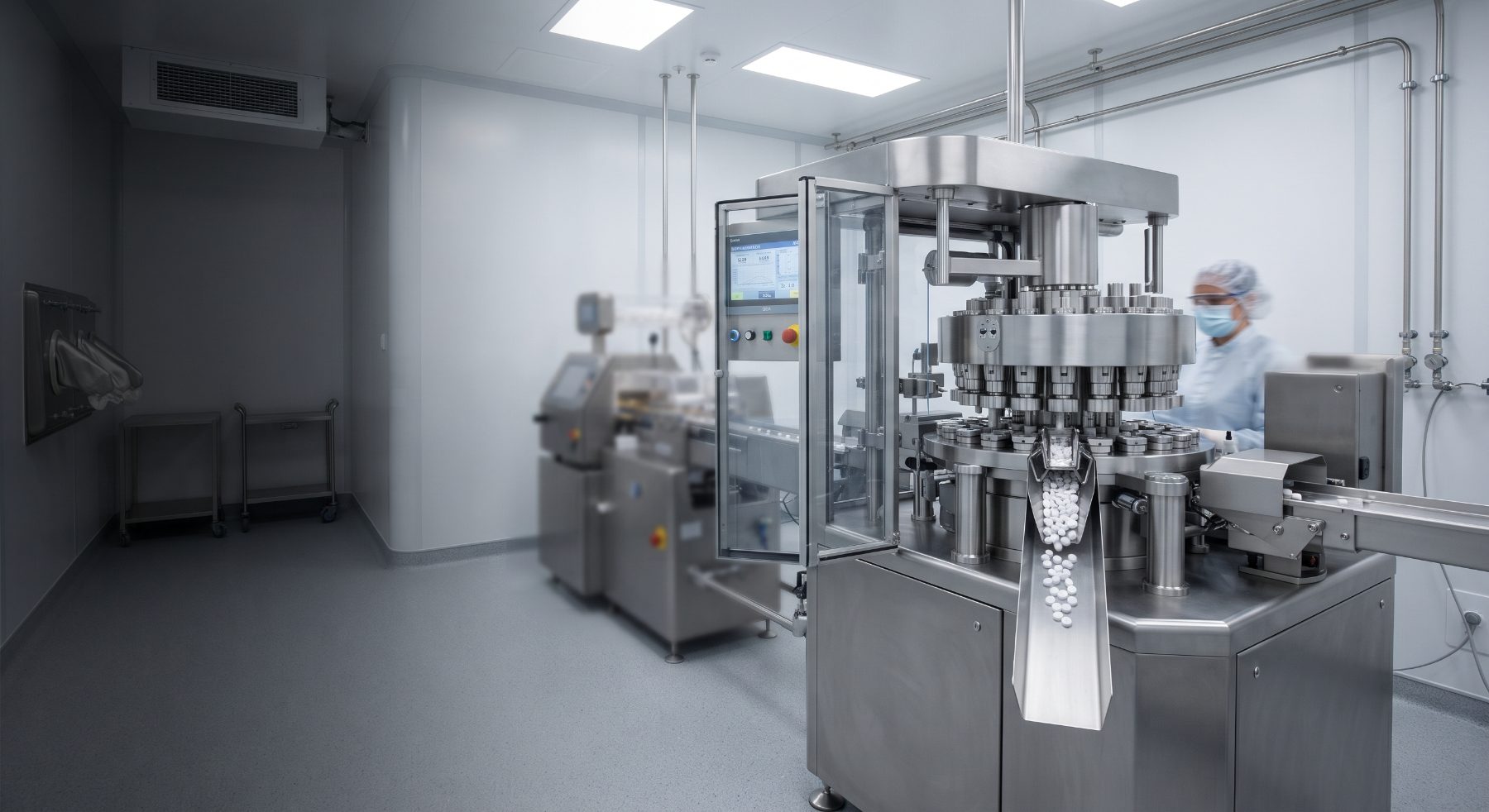
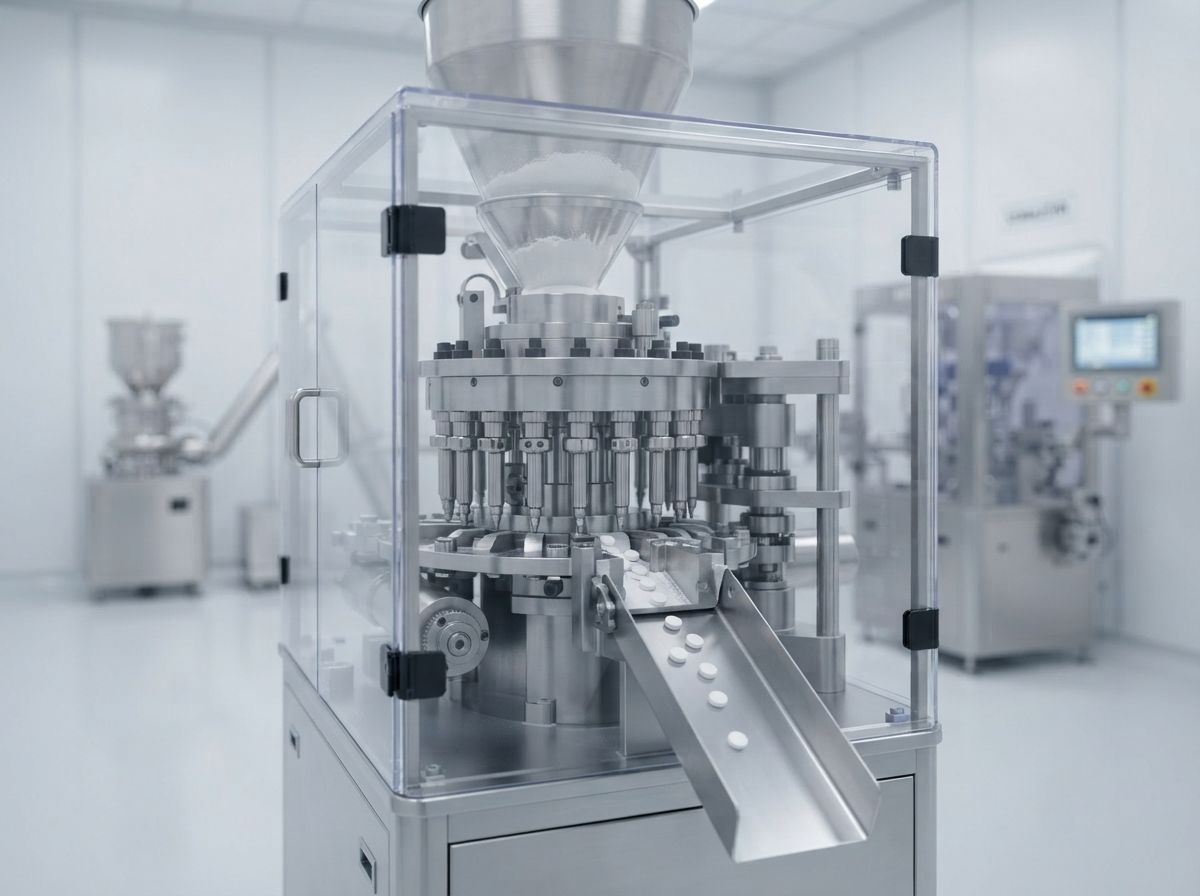
Tablet production brings powder preparation, compression and downstream handling together. Press type and tooling are usually chosen around tablet size, formulation behaviour and the batch sizes the operation needs to support.
EQUIPMENT TYPES
- Single-punch tablet presses
- One punch station, typically used for formulation trials, small batches and tooling evaluation.
- Rotary tablet presses
- Multiple stations on a rotating turret for continuous compression at higher output.
- Tablet dedusters
- Remove loose powder and fines from tablet surfaces after compression.
- Metal detectors
- Inline checks that reject tablets containing metal contamination.
- Tablet testing equipment
- Hardness, friability, thickness and weight checks during and after compression.
- Compression tooling
- Punches and dies that define tablet shape, size, embossing and scoring.
WHAT TO CONSIDER
- Batch size and throughput
- Tablet size, shape and embossing
- Powder flow and compressibility
- Tooling standard and compatibility
- Cleaning and changeover
Capsule Manufacturing
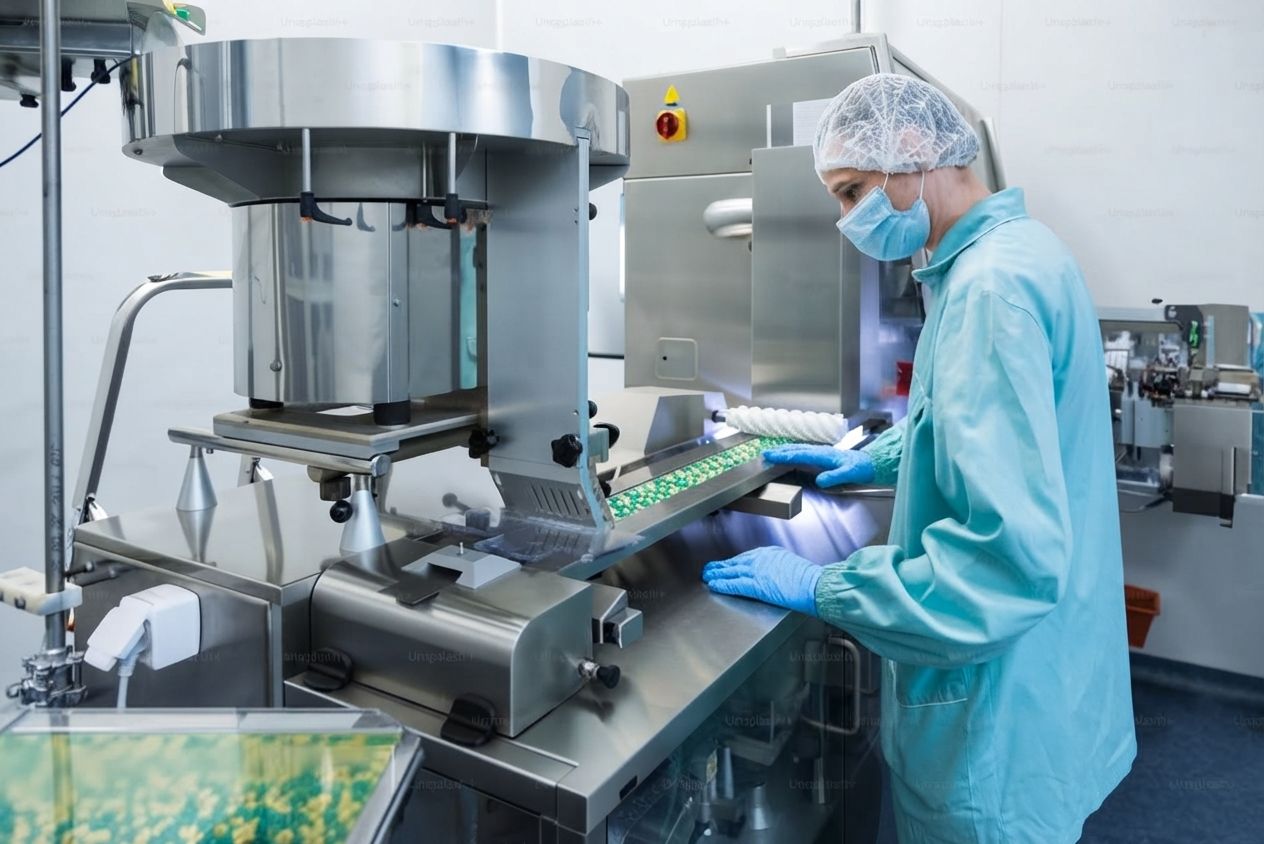
Capsule production depends on a fill material that flows and doses consistently. Equipment ranges from manual and semi-automatic fillers for small batches to automatic machines for continuous operation.
EQUIPMENT TYPES
- Capsule filling equipment
- Manual, semi-automatic or automatic dosing of powder or pellets into hard capsules.
- Capsule polishing
- Removes surface powder and improves appearance before inspection and packaging.
- Powder preparation
- Weighing, sifting and blending to produce a uniform fill material.
- Inspection and weight checking
- Visual inspection and weight verification to identify defective or out-of-range capsules.
- Supporting equipment
- Capsule sorters, separators and transfer equipment around the filler.
WHAT TO CONSIDER
- Capsule size range
- Fill-weight consistency
- Powder flow characteristics
- Throughput and level of automation
- Cleaning and changeover
Powder Processing
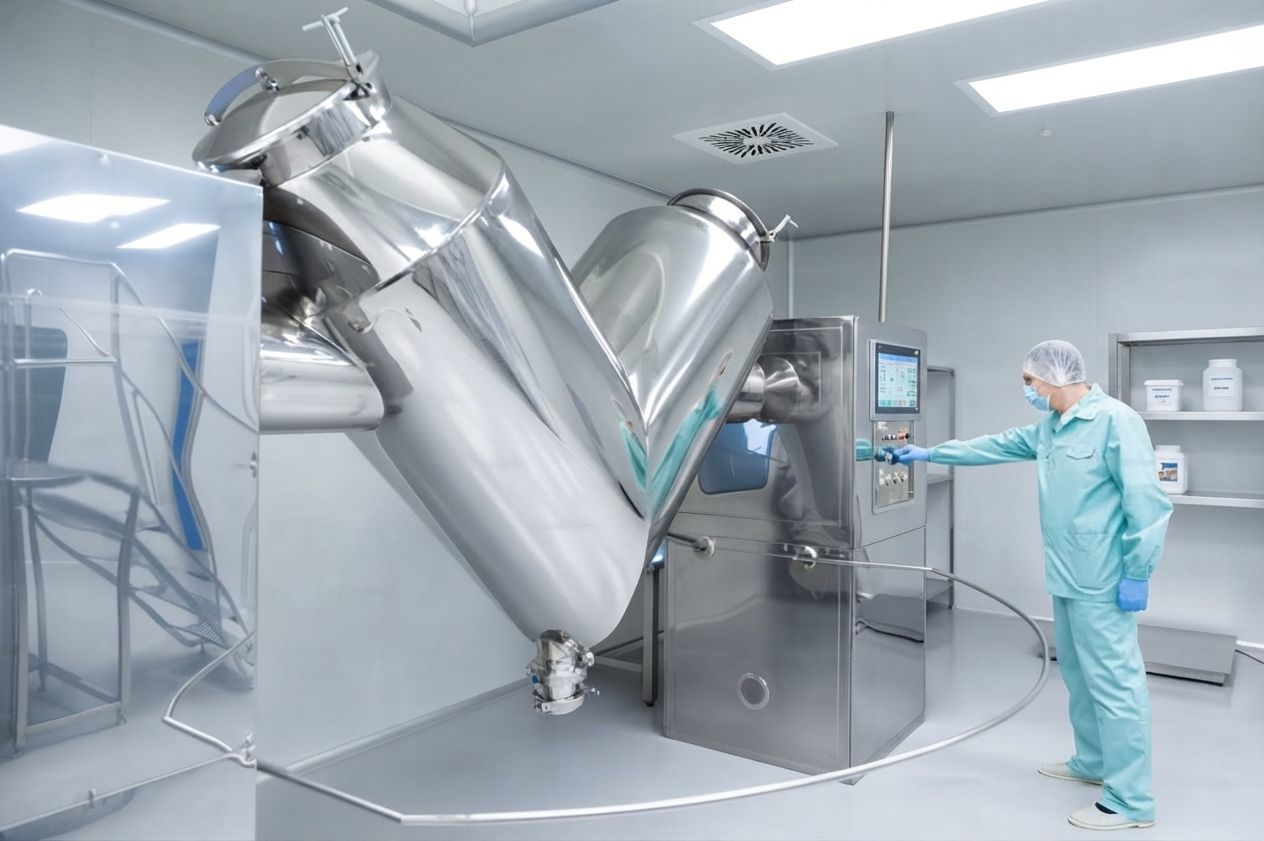
Most solid dosage forms start as powder. Sifting, blending and milling determine particle size and uniformity, and containment protects operators and products when potent or dusty materials are handled.
EQUIPMENT TYPES
- Sifters
- Separate oversized particles and break up agglomerates before blending.
- Blenders
- V-, bin and ribbon designs that combine actives and excipients into a uniform mix.
- Milling equipment
- Reduce or standardise particle size to support flow, blending and dissolution.
- Powder transfer
- Vacuum conveying and gravity transfer between process steps.
- Handling and containment
- Hoods and enclosures that limit dust exposure during weighing and transfer.
WHAT TO CONSIDER
- Particle size targets
- Blend uniformity
- Material potency and dust exposure
- Batch size and working volume
- Cleanability between products
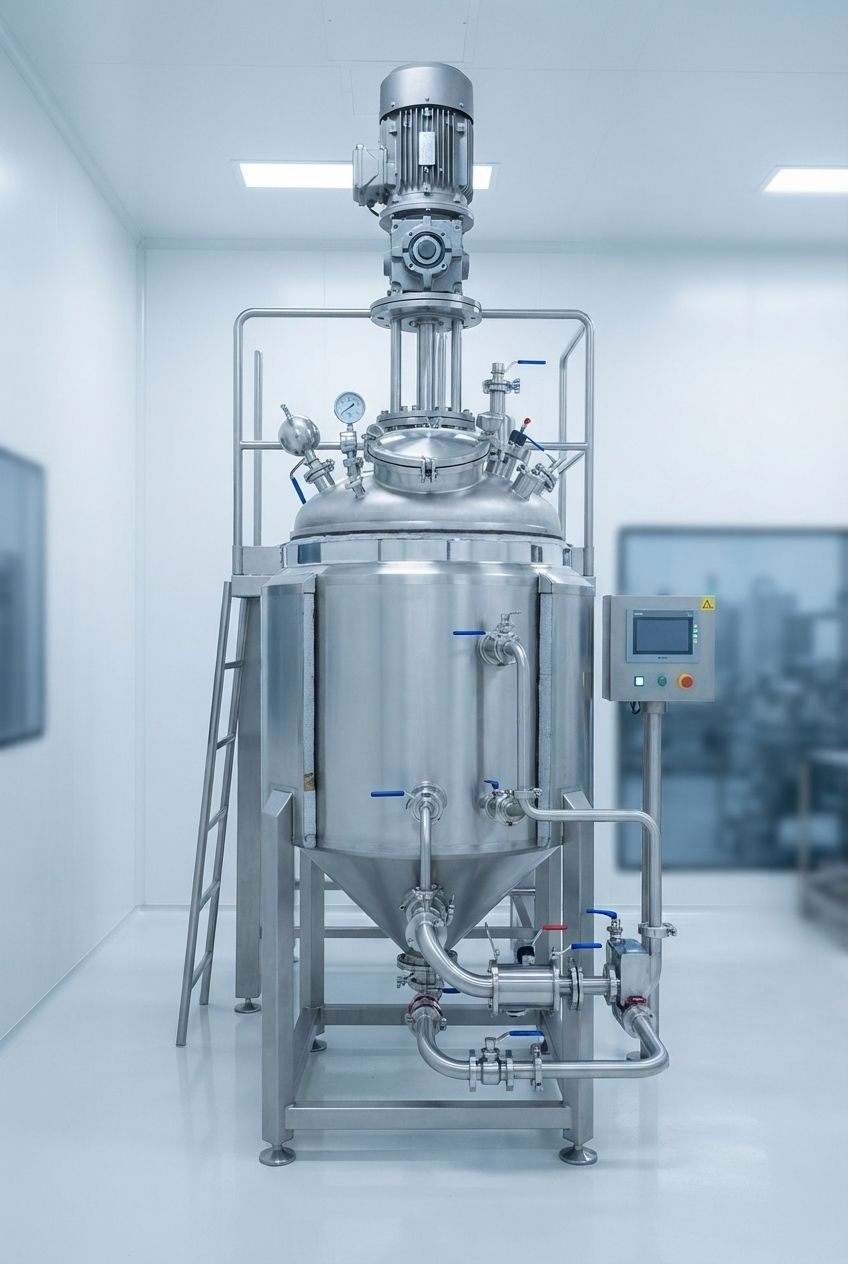
Liquid & Semisolid Processing
Liquids, creams and gels are produced by controlled mixing, often with heating and homogenization. Viscosity largely determines the type of mixer, the transfer method and how the product is filled.
EQUIPMENT TYPES
- Mixing systems
- Tanks and vessels with agitators sized to batch volume and product viscosity.
- Homogenization equipment
- High-shear mixing that reduces droplet or particle size in emulsions and suspensions.
- Liquid processing
- Purified water supply, inline mixing, filtration and holding tanks for solutions.
- Cream and gel processing
- Jacketed vessels, vacuum deaeration and ointment mills for semisolids.
- Related production equipment
- Transfer pumps and connections between processing and filling.
WHAT TO CONSIDER
- Viscosity range
- Heating and cooling
- Shear sensitivity
- Air entrapment and deaeration
- Batch volume and transfer to filling
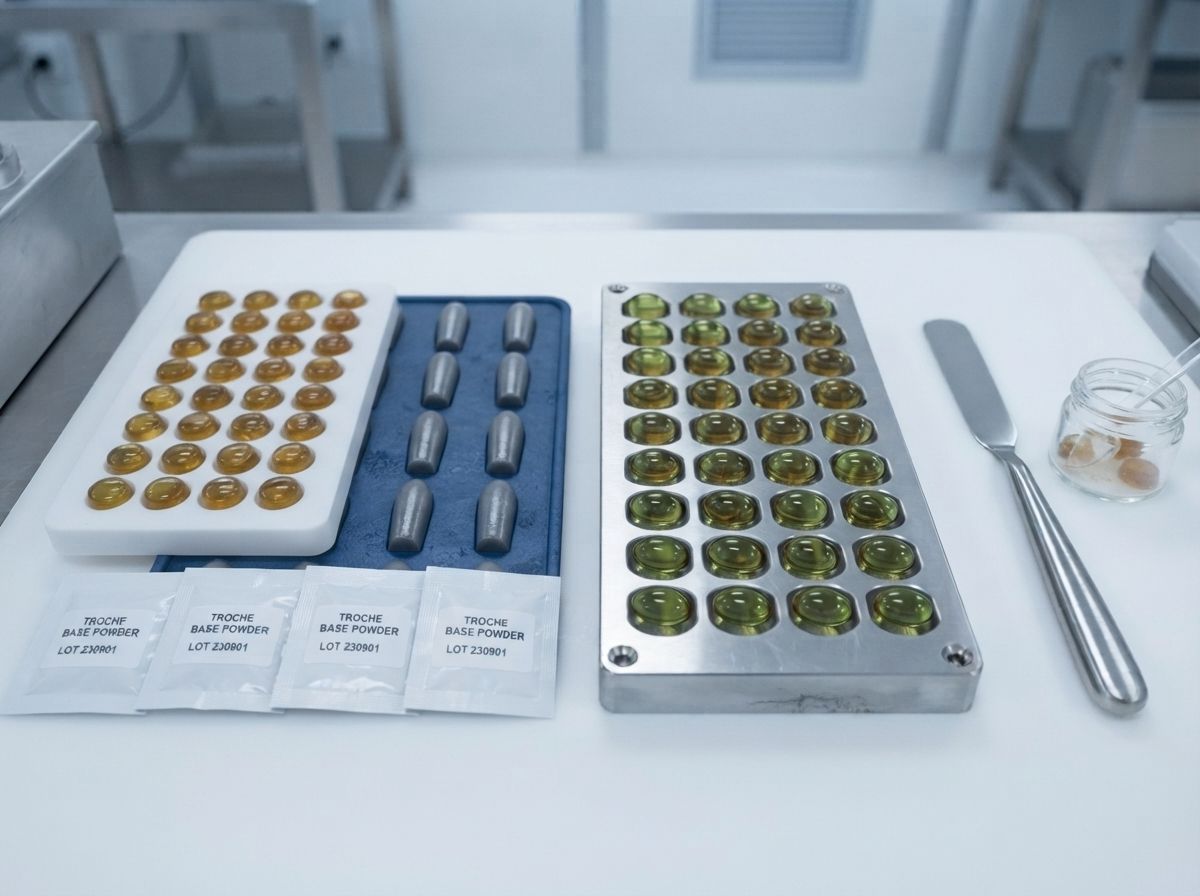
Specialty Dosage Forms
Troches and orally disintegrating tablets need processes that differ from conventional tablets. Molding, dosing into blisters and drying steps are common, and many projects begin at small scale.
EQUIPMENT TYPES
- Troche equipment
- Melting kettles, mixing vessels, molds and cooling for molded lozenges.
- ODT equipment
- Slurry preparation, blister dosing and drying for orally disintegrating tablets.
- Specialized processing
- Equipment selected around a specific base, active or release requirement.
- Dosage-form-specific considerations
- Taste masking, moisture sensitivity and fragility affect handling and packaging.
WHAT TO CONSIDER
- Base material and melt behaviour
- Dose uniformity in molds or blisters
- Moisture sensitivity
- Fragility in handling and packing
- Production scale
OTHER EQUIPMENT GROUPS
Equipment types listed are representative. Specific models, configurations and specifications are confirmed for each project.
Discuss Your Manufacturing Equipment
Tell us the dosage form, batch size and stage of development. We can help narrow the equipment types that fit the process.